Eating a Biblically based healthy diet
Ah, diet—such a controversial subject.
In this day and age, it is getting increasingly difficult to eat healthy. Not only are grocery prices skyrocketing, but the quality of our food has decreased over the years. Even organic produce has a fraction of the nutrition it had 50 years ago. Not to mention all the additives and pesticides used today in conventional food production and farming.
It is easy to get caught up in the latest trend such as Paleo, Ketogenic, low carb, vegan, carnivore, etc. The proponents of these various diets often toute many health benefits which can be convincing.
I have to admit that I have tried a couple of them myself, but I always come back to, “What does the Bible say?” As a Christian the Bible should be our ultimate authority.
There are some clear guidelines in the scriptures that are ignored by many Christians today.
Some Christians espouse veganism or vegetarianism. Others will eat anything such as pork and shellfish without restriction.
Diets range from vegan to carnivore and everything in between. Each end of this spectrum is extreme. Is this what God intended?
I will say here that this article is not intended to judge anyone’s chosen diet only to outline what the Bible says. There are definitely times for specialized diets for health or religious reasons.
For instance, we know that Daniel would not eat the delicacies or drink the wine offered to him in Babylon, instead he ate only vegetables for a period of time. (We don’t really know how long he ate this way.) Possibly the reason he abstained from these foods was because these foods were too rich and may have been offered to idols and that is the reason he would have been defiled.
Dan 1:8 But Daniel purposed in his heart that he would not defile himself with the portion of the king’s delicacies, nor with the wine which he drank; therefore, he requested of the chief of the eunuchs that he might not defile himself.
There were also times when people abstained from certain foods or drink when taking a vow to God.
That being said, under normal circumstances, what does the Bible tell us about the foods we should eat?
Let’s look at some examples from the bible:
Gen 1:29 And God said, “See, I have given you every herb that yields seed which is on the face of all the earth, and every tree whose fruit yields seed; to you it shall be for food.
Right from the beginning God told Adam and Eve that fruit and vegetables are good for food. It may be that they did not eat animals at this time until they left the Garden of Eden.
The first animal sacrifice happened when Adam and Eve sinned. God sacrificed an animal and gave them the skins to wear.
I have heard it said that people did not eat animal flesh until after the flood, but we know that Able raised animals and made sacrifices.
Gen 4:2 And Abel was a keeper of sheep, but Cain was a tiller of the ground.
What reason would you raise animals unless they were for food? Even when an animal was sacrificed, often a portion of it was eaten by the person making the offering or sacrifice.
Lev 7:15-16 And the flesh of the sacrifice of his peace offerings for thanksgiving shall be eaten the same day that it is offered; he shall not leave any of it until the morning. 16. But if the sacrifice of his offering be a vow, or a voluntary offering, it shall be eaten the same day that he offereth his sacrifice: and on the morrow also the remainder of it shall be eaten:
Also, God instructed Noah to take 7 pairs of clean animals and 2 pairs of unclean animals into the ark.
Gen 7:2 Of every clean beast thou shalt take to thee by sevens, the male and his female: and of beasts that are not clean by two, the male and his female.
It doesn’t seem that God had to explain what clean and unclean meant regarding animals. This must have been common knowledge even then.
Another point to consider that if God all of a sudden said to eat meat after the flood—why? What changed? Did God change man’s physiology to now be able to digest meat instead of just vegetables? That doesn’t make sense.
Lev 11 gives a listing of clean and unclean animals. These laws were not just for the Jews as stated above Noah knew of these stipulations long before the Jewish people existed.
Here are a few other scriptures mentioning food:
Ex 3:8 And I am come down to deliver them out of the hand of the Egyptians, and to bring them up out of that land unto a good land and a large, unto a land flowing with milk and honey
Gen 14:18 And Melchizedek king of Salem brought forth bread and wine: and he was the priest of the most high God.
Gen 25:34 And Jacob gave Esau bread and stew of lentils;
Deut 8:8 a land of wheat and barley, of vines and fig trees and pomegranates, a land of olive oil and honey;
Gen 27:7 Bring me venison, and make me savoury meat, that I may eat, and bless thee before the LORD before my death.
Did the Law Change in the New Testament?
Did God change His mind in the New Testament and allow any kind of animal to be eaten? God’s law is consistent. He does not change.
Heb 13:8 Jesus Christ the same yesterday, and today, and forever.
In Acts 10 we see the famous vision of Peter’s when he sees a sheet full of all types of animals and is told to eat. Peter never once considered that he was now allowed to eat pork. As a Jew this concept would have been disgusting to him. By reading the whole account we see that Peter is being told that the gospel is to go to Gentiles as well as Jews. It had nothing to do with food.
The law about clean and unclean foods has not been changed.
What if we could go back in time and eat the way Jesus Christ ate? As the only human being who lived a perfect life, I am sure he would have eaten healthy. I can imagine a table laid with fresh bread, humous, olives, cucumbers maybe some fish and wine, with grapes or figs for dessert. Sounds pretty good actually.
Most likely meat would have been served for special occasions and family get-togethers such as a wedding or festival. They didn’t have refrigeration. Butchering a large animal wouldn’t be practical on a regular basis. Small animals like fowl or fish were probably consumed more often.
Another scripture that could be misconstrued is:
1 Tim 4:1-4 Now the Spirit speaketh expressly, that in the latter times some shall depart from the faith, giving heed to seducing spirits, and doctrines of devils; Speaking lies in hypocrisy; having their conscience seared with a hot iron; Forbidding to marry, and commanding to abstain from meats, which God hath created to be received with thanksgiving of them which believe and know the truth. For every creature of God is good, and nothing to be refused, if it be received with thanksgiving:
This is not saying that all animals are good to eat. If you read the verse closely you will see that it says, “which God created to be received with thanksgiving” meaning the animals he created for food according to the law in Lev 11. Not unclean animals.
This passage also seems to be saying that it is a doctrine of demons to abstain from certain foods that God has given us to enjoy.
There is a movement today against eating meat. Cows are apparently producing too much methane and harming the environment. Instead, they want us to eat bugs.
People have been raising and eating animals for thousands of years. They are actually good for the environment. Those practicing regenerative farming can attest to this.
Today’s World
It is likely though, that in today’s world of convenience we eat too much meat. It is too easy to go to the store and buy a roast or a chicken instead of having to butcher it ourselves. I suspect that in ancient times meat was not eaten as frequently as many of us do today.
Something that is being demonized these days is grain and bread. Some health proponents will tell you that carbs and especially wheat bread is the worst thing you can eat. But wait a minute, hasn’t bread been the staple of life throughout history? The word “bread” is found 361 times in the KJV.
Bread is supposed to be healthy for us.
Psa 104:15 …and bread which strengthens man’s heart.
Jesus is called the bread of life.
John 6:35 And Jesus said unto them, I am the bread of life: he that cometh to me shall never hunger; and he that believeth on me shall never thirst.
Just my speculation here, but maybe because of the above verse, Satan has attacked bread and made it unhealthy for us? What kind of bread are we eating today? Bread made from flour that is stripped of its nutrients.
I have recently learned about the health benefits of milling your own whole grain. Fresh milled flour is full of B vitamins, vitamin E, selenium and magnesium, as well as containing fiber that is beneficial to our gut microbiome.
It wasn’t until the early 1900’s that refined white flour came on the scene. To learn more about the health benefits of milling your own flour, check our Sue Becker of Bread Beckers. She has a wealth of info on how healthy this type of bread is for us.
Many people have issues today with gluten. Why? Maybe because conventionally farmed grains are sprayed with a pesticide (glyphosate) as a desiccant to dry them out before harvest. Glyphosate actually disrupts the microbiome which is probably what is causing gluten sensitivity. The gluten is not the enemy the pesticide is.
If you can source organic grains that are not sprayed and mill it yourself you will probably find that your gluten sensitivity will go away and your health will improve. (Check out my article on sourdough bread). I am not referring to people who are celiac but only sensitive to gluten. Sourdough made from fresh milled grain is much healthier than using commercial yeast.
Veganism
Veganism has become somewhat popular these days. Although, only about 2 percent of the world’s population is vegan.
As a Christian, what is your reason for being vegan? It is definitely not a Biblical tenet. In fact, the Bible says that those who eat only vegetables are weak.
Rom 14:2 For one believes he may eat all things, but he who is weak eats only vegetables. (NKJV)
I am not trying to convince vegans to eat meat. We all have the right to decide what we believe is a healthy diet for ourselves and our families. But it needs to be recognized when you are following the teachings of a person and not God.
Eating vegan can be healthy. But unless done right it can be deficient in certain nutrients as any diet can.
I recently read an article on Dr. Mercola’s site talking about an essential fatty acid called C15:0. Not getting enough of this fatty acid in our diets can lead to a variety of health issues. Our bodies cannot make enough of this fatty acid that is why we need to get it from diet. The main sources of C15:0 are found in full-fat diary, butter, grass fed beef, lamb, some fish, pasture raised eggs and cultured diary such as kefir.
Science is confirming that the foods God gave us to eat supply us with the nutrients we need to stay healthy.
We all have free will and can do as we please as long as it is within the law of God. I am only saying that promoting veganism should not be upheld as superior to the Bible. We know that Christ ate meat. He kept the Passover every year and would have eaten the Passover lamb.
If you judge others for eating meat then you are also judging Christ. Likewise, if we do eat meat then we are not to judge those who do not. Neither contradicts the law of God.
Rom 14:3 Let not him who eats despise him who does not eat, and let not him who does not eat judge him who eats; for God has received him.
Conclusion
As a Christian, I believe that God created foods for our enjoyment and nutrition. He created many wonderful things for us to eat. A lot of the items we are to avoid are actually unhealthy. Pork can cause trichinosis; shellfish are the clean-up crew of the ocean—many people are allergic to it.
Apparently, pigs are the animal that most closely resembles a human being, obviously not in appearance, but in physical biology. Maybe another reason God doesn’t want us eating them.
God has provided an abundance of clean animals for us to eat, but many people insist on eating what is unclean. In non-Christian; countries many disgusting and dangerous things are considered delicacies—snakes, octopus, blowfish to name a few.
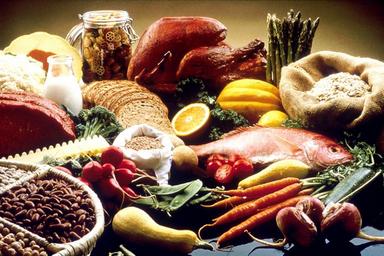
We are told we can eat fruit, vegetables of all kinds, grains, legumes, bread, meat (from the clean list) many fish, olive oil, honey, milk and wine. (See my article on Should a Christian drink Alcohol?)
We are to live balanced lives. Gluttony and drunkenness are condemned. All things in moderation.
Obviously, we should eat as natural as possible. Stay away from processed foods and enjoy what God made unadulterated.
If you can produce some of your own food, even better. When you make your own food, you know what went into it.
Bon appetite.
Leave a Reply