Why make sourdough Bread?
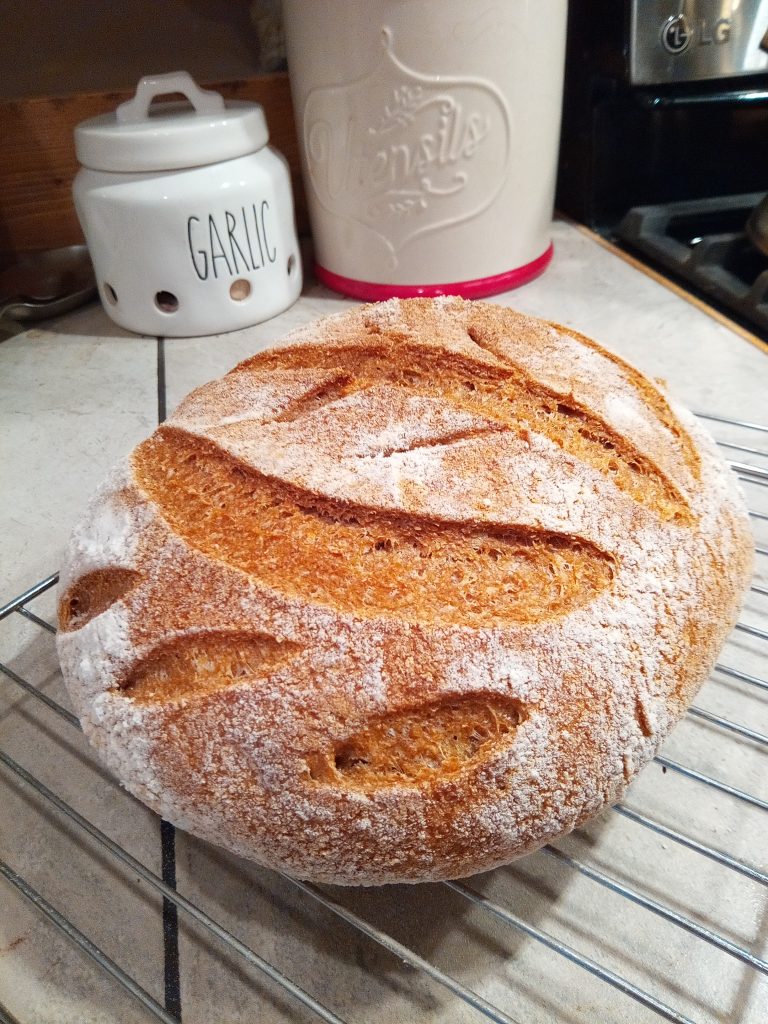
Because it’s fun, and it’s really, really good for us. If you are going to eat bread eat sourdough. Hopefully organic sourdough.
Why are people having problems with gluten, digestive issues and weight gain when they eat bread? Bread has been a staple of life since the beginning of agriculture (which started when Adam and Eve left the garden of Eden). But people have only started having digestive problems with bread for the last few decades. What is going on?
Reasons you should not eat commercial bread:
- Glyphosate
Most flour (unless it is organic) has been sprayed with glyphosate to dry the grain before harvest. This makes harvesting easier and quicker for the farmers, but not so good for us.
Glyphosate is the main ingredient in the weed killer Roundup. It was originally used to descale commercial pipes. Then they discovered that it killed organic material so it was turned into a weed killer. It is banned in most European countries. The World Health Organization declared it a probable carcinogen in 2015. Yet it is still widely used in North America.
Glyphosate is the most prevalent chemical spayed on our crops today and is the biggest threat to our health. If you want to know more about it check out Dr. Zach Bush online. He has made it his mission to educate people about the dangers of this chemical. You can find many videos of him on Youtube.
- Commercial Yeast
The other reason we are having trouble with bread these days is because we are no longer using wild yeast. Commercial yeast has only been around for the last 160 years or so. In 1857, Louis Pasteur first saw yeast under a microscope. A single strand of yeast was isolated and as a result baker’s yeast was developed. Since manufactured yeast does not take as long to rise bread, it made financial sense for commercial bakers. In essence the healthy bacteria in yeast has been removed in favor of a yeast that works quickly.
On the other hand, sourdough is basically a fermentation process, which is why it takes much longer to rise than commercial yeast. Commercial yeast is a single strain, whereas wild yeast is comprised of multiple stains of yeast and bacteria. Various studies have found 23 strains of yeast and 40 of bacteria. Sourdough or wild yeast comes from the air and the grain.
- Phytic Acid
Another reason commercial bread is hard to digest is because of phytic acid which inhibits enzymes needed for the breakdown of proteins, such as gluten and starch in the stomach. It also binds with minerals such as calcium, magnesium, iron and zinc making them unavailable to us. The fermentation process of sourdough can reduce phytic acid by as much as 90%. The enzymes released during sourdough fermentation basically pre-digest the flour allowing the micronutrients to be available to us reducing bloating and indigestion
Sourdough neutralizes phytic acid compared to commercial yeast which leaves it intact.
- Azodicarbonamide
This is a chemical that is used to make yoga mats, shoe rubber and synthetic leather. It creates tiny bubbles and makes things foamy. Someone decided that it would be good in bread. Who cares if it’s healthy or not?
So now it is used as a bread conditioner and is quite often added to whole wheat flour, unless it is organic or the label states there are no additives. (Roger’s does sell a “no additive” whole wheat flour but it is not organic).
This chemical can also cause gluten sensitivity.
Do you really need to use organic flour and filtered water?
Many people make sourdough without organic, but organic is definitely better because of the bacterial nature of sourdough, you don’t want to introduce harmful bacteria or destroy the good bacteria. I have read that creating a starter from regular flour does not always work, which makes sense because if there is residue from glyphosate in the flour (which there most likely is) it could kill the good bacteria. Glyphosate is an antibiotic. Likewise, the chlorine in water is designed to kill bacteria.
Other sourdough benefits:
Sourdough has a longer shelf life. It will not grow mold as fast as commercial bread. I have had the remnants of a sourdough loaf on my kitchen counter for up to two weeks without going moldy.
It is usually tolerated by people with gluten sensitivity.
It is good for diabetics because it has a lower glycemic index and helps maintain glucose levels.
It helps you maintain a healthy gut microbiome.
Sourdough starter is versatile. It can be used in many recipes including pancakes, naan bread, pizza basically anything that needs a leavening agent.
It is actually not hard to make. It just takes a little forethought and planning.
It tastes great!
Click here to get my recipe for basic sourdough sandwich bread.
Note: If you are not into making your own sourdough on a regular basis, then beware of store-bought. Often it will be called sourdough but will not be made from wild yeast. Often, they just add some sourdough powder for taste but use conventional yeast.
Leave a Reply